Four James Madison College graduates will bring their Madison education to classrooms around the world through the Fulbright U.S. Student Program’s English Teaching Assistant program. As 2026-27 Fulbright ETAs, Natalie Harmon, Belma Hodzic, Hannah Faye Nassar and David Rabinkov will teach and learn in Brazil, Türkiye, Taiwan and Azerbaijan, respectively, while supporting English-language learning and building connections across cultures.
In the Q&As below, the graduates reflect on the experiences that led them to Fulbright and how the year ahead fits into their longer-term plans.
Natalie Harmon
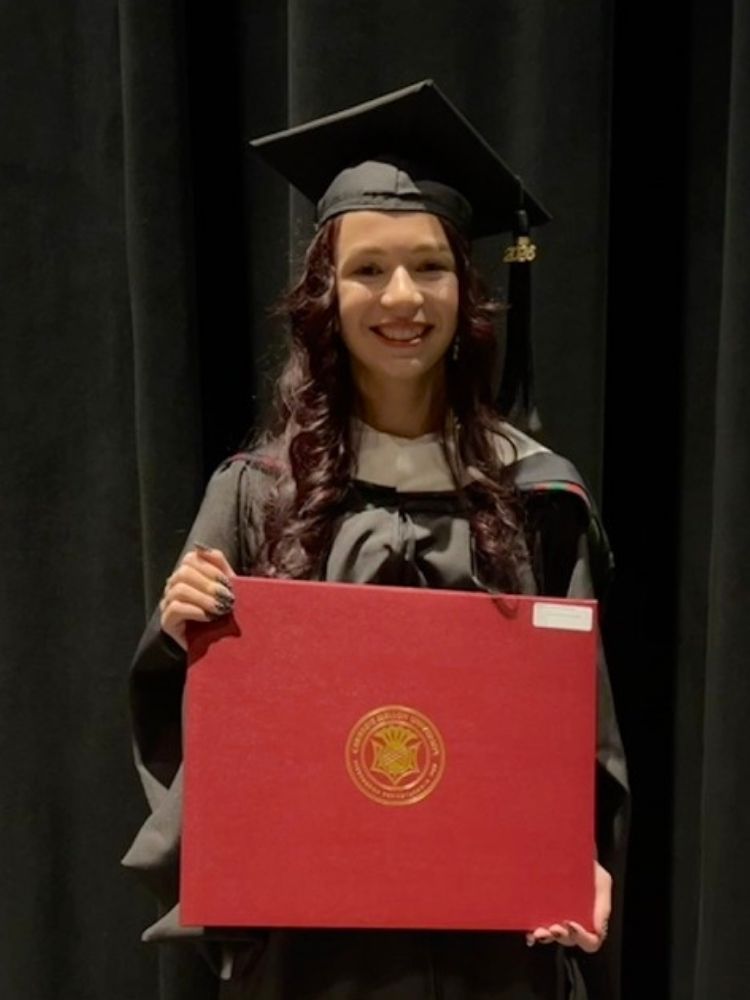
Majors: Comparative Cultures & Politics, Spanish
Minors: Portuguese, Latin American & Caribbean Studies
Graduation Year: 2024
How did you decide to apply to the Fulbright ETA Program? What did the process look like?:
I decided to apply for the ETA program last spring, knowing that I would be able to travel to Brazil after finishing my M.A. in Applied Linguistics and Second Language Acquisition at Carnegie Mellon University in 2026. The Fulbright ETA program aligned with my passion for language teaching and learning, making it an incredible opportunity. I began working on my application last summer with the help of MSU Fulbright Advisor Joy Campbell and professors at MSU and submitted it in the fall. In January, I received news that I was a semifinalist and was invited for a virtual interview with the Brazilian Fulbright Commission, where I presented an English lesson plan that I created with the support of faculty at Carnegie Mellon University. At the beginning of April, I learned that I was an ETA finalist and would be traveling to Brazil in March 2027.
Share your connection to/interest in Brazil. What interested you in pursuing the ETA opportunity there?:
My interest in Brazil began many years ago, when I first started listening to Brazilian music like MPB and bossa nova. While at MSU, I earned a minor in Portuguese, participated in JMC’s study abroad program in Salvador, Brazil, and helped start MSU’s Portuguese Club. Since then, my interest in Brazil has only grown stronger. After graduating from MSU, I began practicing capoeira, an Afro-Brazilian martial art that I first tried in Salvador. Today, I train several times a week and conduct research on language learning within the capoeira community. Evidently, Brazil was the perfect fit for me as an ETA.
How does the Fulbright opportunity align with your broader goals?:
This Fulbright opportunity aligns with my goals of pursuing a PhD in applied linguistics, conducting research on language teaching and learning, and growing as a language teacher. As a Spanish instructor, I am excited to add English teaching to my skillset. Additionally, I hope to improve my Portuguese skills while in Brazil.
Belma Hodzic
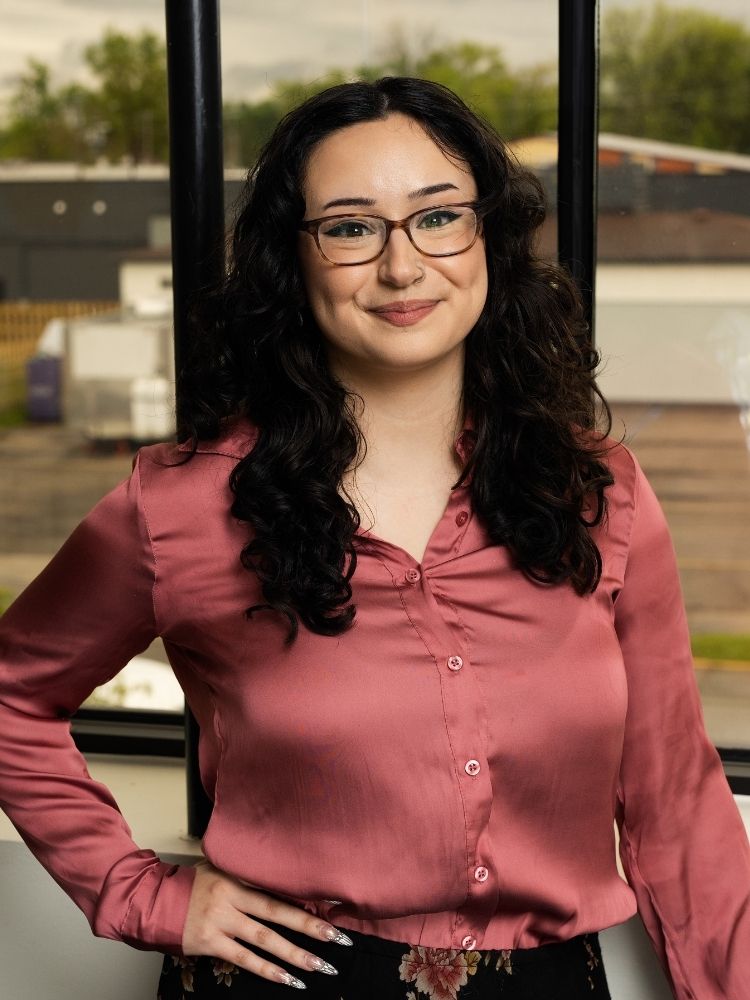
Majors: Comparative Cultures and Politics, World Politics
Minors: Film Studies, Women's & Gender Studies
Graduation Year: 2025
How did you decide to apply to the Fulbright ETA Program? What did the process look like?:
I decided to apply to the Fulbright ETA program because I really wanted to expand my worldview and experiences before attending grad school. I've had two previous experiences as a student and researcher abroad, and I fell in love with being a part of another community and working, learning, and livings besides others in a new environment. As a previous teaching assistant (TA), I also really wanted to lean more into teaching before I became a student again. I know a few JMC alums who did the program, so I wanted to try and pursue it myself! The process was long, but it was made much easier by Joy Campbell, the MSU Fulbright Advisor. After a series of writing essays and re-editing them countless times, you get to a point where you feel confident enough in your words and your ability to do the program, that you submit your work, and wait!
Share your connection to/interest in Türkiye. What interested you in pursuing the ETA opportunity there?:
Deciding on Türkiye felt like an easy decision for me. As a Bosnian American, my family and I share a lot of cultural similarities with Turkish traditions, and I wanted to be somewhere that felt similar and different at the same time. Türkiye has also continuously hosted one of the largest refugee populations in the world, largely from Middle Eastern conflicts. I’ve always been interested in migration, immigration, and peace/conflict, so pursuing an ETA opportunity in Türkiye felt like a natural fit. Türkiye also has a very interesting geopolitical and historical role by being the crossroads between Europe, the Middle East, and North Africa, and I wanted to be in an environment where I could not only teach English, but also learn immensely from my students and from the country I'll be living in.
How does the Fulbright opportunity align with your broader goals?
As someone who wants to go into conflict resolution, being an ETA in Türkiye gives me a chance to learn from communities that are shaped by displacement while also working in education. I find that learning within communities instead of studying/researching them is much more meaningful and holistic, so Fulbright seemed like a natural next step for me. I plan on sharing my experiences when I return to the U.S., especially in how the U.S. and Türkiye differ in immigration and refugee settlements, and I hope to carry that with me into my future education and career.
Hannah Faye Nassar
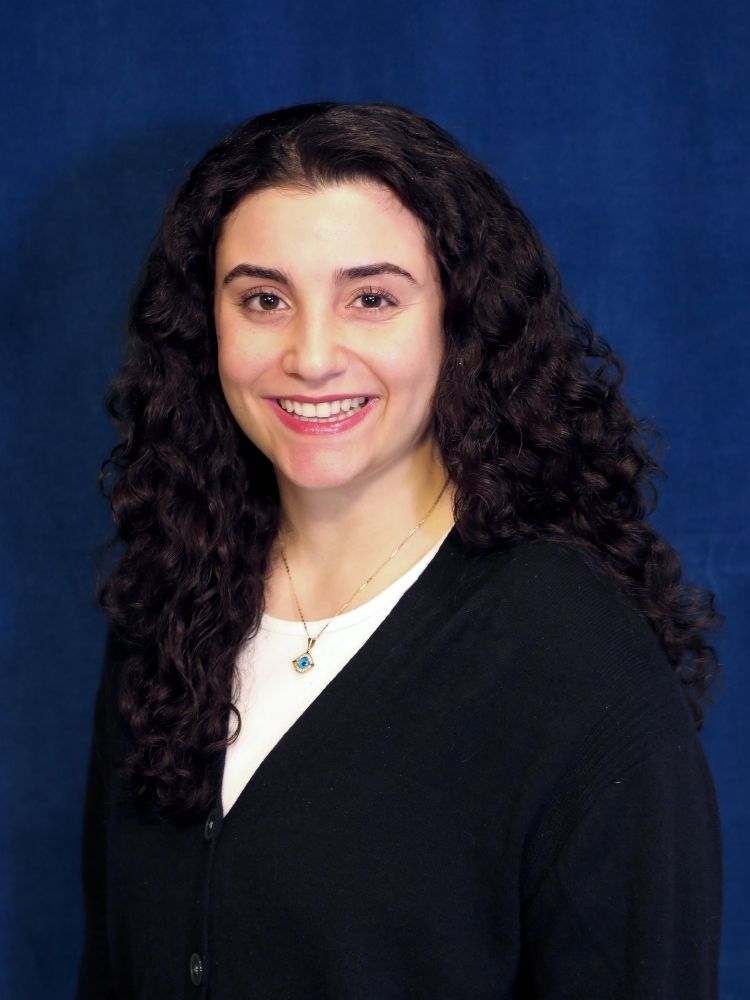
Majors: Comparative Cultures and Politics
Minors: International Development, Peace & Justice Studies
Graduation Year: 2024
How did you decide to apply to the Fulbright ETA Program? What did the process look like?:
I didn’t wake up one day and think, “I should be a Fulbrighter.” I started with an honest question: what would it look like for someone like me, an Arab American who is often critical of aspects of U.S. foreign policy yet firmly committed to public service, to represent the United States abroad without downplaying the parts of my identity that shape how I understand policy and public life? The concept of “citizen diplomacy” provided me with a framework for confronting this dilemma: the belief that ordinary people can shift how countries see each other.
Deciding to apply meant sitting with my own contradictions. My academic background trained me to think critically about international programs like Fulbright and weigh their ethics: who benefits, what power dynamics are at play, and whether my presence could leave a net positive impact in my host community and back home. Those questions made me cautious about applying at first. I only moved forward after talking with a U.S. diplomat and returned Peace Corps volunteer Mayeen Mohammedi, who explained that my service-driven attitude, background, and desire to be accountable are precisely why I should go for it. If people who carry these questions self-select out, the story of what America is, and who gets to represent it, becomes increasingly limited.
The application process itself was both technically challenging and surprisingly emotional. Technically, it was long nights after work, revising my essays at the Writing Center, messaging former Fulbrighters, and regularly meeting with my advisor, Joy Campbell. Emotionally, it meant confronting the parts of myself that feel “too much” for some spaces and “not enough” for others – too political, too attuned to harm, and too willing to name the uncomfortable parts of policy. I decided to apply knowing this would be hard, confusing, and more than I can plan for, but also knowing I would think about it for years if I walked away. We do not see things as they are; we see them as we are, and I want people with experiences like mine to be part of that ‘we’ shaping how the United States shows up in the world.
Share your connection to/interest in Taiwan. What interested you in pursuing the ETA opportunity there?:
My interest in Taiwan started after reading an article in my MC 220 class about geopolitics. Taiwan’s role in the semiconductor industry, the global supply chain, and its relationship with China are all impossible to ignore. But at my core, I’m drawn to the gap between how a place is represented in the news and how the people live. Taiwan is often described as a “flashpoint” or “issue,” its significance framed through the priorities of global powers rather than by the people who actually live there. I know this feeling first-hand, hearing the Levant – a region I love – spoken about mostly in terms of risk and conflict and presented as a strategic problem. This parallel, combined with my intermediate Mandarin, made me want to experience a fuller picture of Taiwan. As an English Teaching Assistant, I want to learn from the kids who are growing up with all of this in the background, who go to school, fall in love with hobbies, worry about exams, and joke with friends under the weight of narratives they didn’t choose.
How does the Fulbright opportunity align with your broader goals?:
So much of my life has been about holding the in‑between: between Arab and American, Muslim and Christian, critical of institutions yet still drawn to work inside them, wanting to protect my communities from harm and also walking straight into the systems that helped create that harm. My broader goal is to lean even more intentionally into that in‑between and use my biculturalism as an asset in diplomacy or international public service. I want to be the person in the room who can explain what a policy feels like at the grassroots level and stay long enough to help shift the outcome for the people living with it.
Fulbright will push me to practice this kind of people-first diplomacy every day. As an ETA in Taiwan, no one is asking me to parrot US foreign policy, only to serve as a cultural ambassador. I imagine my students will ask real questions and that my colleagues will have their own views about the U.S. I will have to navigate misunderstandings, apologize when I mess up, and figure out how to stay honest about my politics while still standing there as the American in the room. This is the exact tension I will face in diplomacy, and why Fulbright is essential to reaching my future goals.
Through my experience in the Madison Diversity Leadership Program, I’ve become committed to making public affairs feel less distant and more just, especially for people who look like me or share my experiences. I’m not naïve; I know one year in Taiwan will not “fix” world politics. But I expect that it will sharpen my sense of what’s possible from within the government and what’s not, what it costs to stay in these spaces, and what it will mean for my communities to see me as a successful Fulbrighter.
David Rabinkov
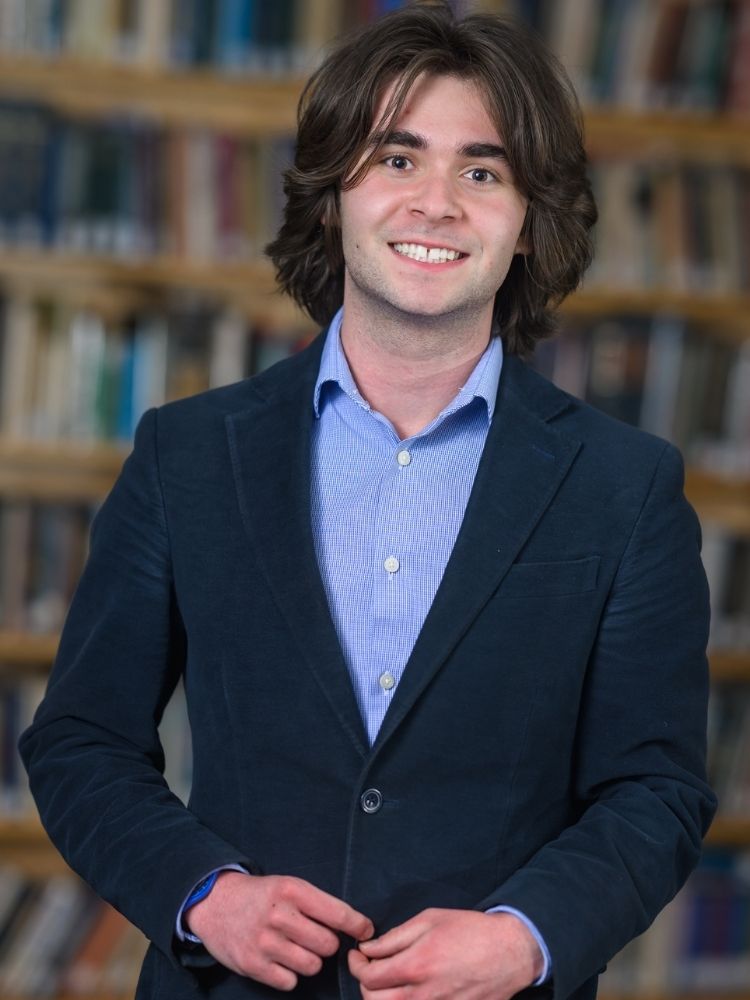
Majors: International Relations, Russian Language, Comparative Cultures and Politics
Minors: Russian & Eurasian Studies, Jewish Studies, European Studies
Graduation Year: 2026
How did you decide to apply to the Fulbright ETA Program? What did the process look like?:
I knew I would be applying for the Fulbright years before I was even eligible! My mind was made up in 2023 when I attended the JMC Education Abroad Fair. The application process was quite intense: I wrote multiple personal essays, secured three academic letters of recommendation, a fourth letter of recommendation regarding my linguistic abilities and was interviewed by two diplomatic staff members of the U.S. Embassy in Azerbaijan. Being well-informed early on, thanks to JMC, helped me tackle the application efficiently and effectively, as did the support of Joy Campbell, the MSU Fulbright Program Advisor, who was an amazing resource throughout the process. Thanks to Joy, I got to meet with two former Fulbrighters who teach at MSU, who both read my application and gave me personalized feedback and advice.
Share your connection to/interest in Azerbaijan. What interested you in pursuing the ETA opportunity there?:
My identity as a first-generation Ukrainian-Jewish American, fluency in the Russian language; my research assistantships at the TRT Project and the JMC Living Archive under Dr. Martha Brill Olcott and Michael Downs; my internship at St. Vincent Catholic Charities Refugee Services Department; my fellowship in India with the 2024 Madison Diversity and Leadership Program; my 2025 study abroad in Poland thanks to the Bloom, Kussy, and JMC Deans Award scholarships; and my time spent volunteering in an elementary school in my hometown of Flint, MI; and the multiple JMC courses I took that focused on the post-Soviet space all played an extremely important role in shaping my world view and thus my interest in pursuing an ETA in Azerbaijan.
The regional, linguistic, historical, and cultural knowledge I gained from these experiences positioned me well for the location, and my dedication to education and community development led me to pursue an ETA position. Lastly, my senior thesis, completed under the guidance of Dr. Jason Merrill, made Azerbaijan especially attractive to me because of its relevance to my research.
How does the Fulbright opportunity align with your broader goals?:
Given that the Fulbright Award is funded by the United States Department of State, the program aligns perfectly with my career aspirations. While I am in Azerbaijan, I plan to take the Foreign Service Officer Test in hopes of pursuing a career in the Foreign Service when I return. The teaching element of the program aligns with a broader goal of mine, which is to spend a lifetime acting as a cultural bridge between the United States and the post-Soviet space.