Donovan Fobbs spent last summer juggling time zones. While visiting NATO headquarters and the European Parliament in Brussels, the James Madison College student navigated a six-hour time difference to participate in the Roosevelt Institute’s Forge Fellowship.
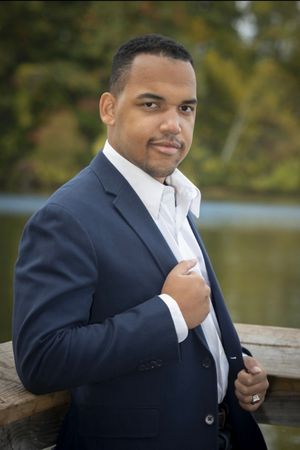
Last year, Fobbs became the first JMC student to complete the program, a six-month fellowship that provides foundational skills in research and policy analysis.
The Roosevelt Institute is a think tank operating in Washington, D.C., and New York, and serves as the nonprofit partner to the Franklin D. Roosevelt Presidential Library and Museum. Its student-focused arm, Roosevelt Network, runs fellowships designed to build the next generation of policy leaders. The virtual Forge Fellowship serves as the entry point for undergraduate students, where fellows study progressive policy approaches.
Fobbs is majoring in International Relations and Comparative Cultures & Politics at JMC, a combination that reflects his interest in understanding both how political systems operate and their impact on communities.
“I want to understand the grassroots side of advocating for different people around the world and how political systems affect people, but also how those political systems themselves are run,” he said.
For the first three months of the Forge Fellowship, Fobbs completed trainings and worked through policy analysis assignments. He attended virtual calls from Belgium during JMC’s International Relations education abroad program, then flew directly from Brussels to New York for a Forge Fellowship conference. Fellows met Institute leadership and staff, researchers and scholars, university partners from schools like Harvard and Yale, and policy experts.
At the event, organizers assigned fellows to teams and gave each the task of critiquing a specific policy. Fobbs was placed with students from New York and North Carolina. Their task: critique Seattle’s democracy voucher program, an attempt to reduce corporate influence in local elections by providing every resident with a $100 voucher to donate to a candidate of their choice.
The group identified critical limitations to the program, determining that voucher programs alone can’t compete with hundreds of millions of dollars flowing through outside donations.
“By itself, it’s not enough,” Fobbs said. “We need to also limit dark money and have higher disclosure laws.”
Fobbs and fellow team members presented their critique in November, competing against six other groups. Their group was one of two selected as winners and invited to the Roosevelt Institute’s virtual Winter Policy Expo in December, where they shared their research with Roosevelt Institute staff, program alumni, students and policymakers.
This summer, Fobbs will travel to Washington, D.C., for the Roosevelt in Washington Fellowship. The eight-week program places fellows with partner organizations including congressional caucuses, environmental advocacy groups and civil rights organizations. He’ll live in Georgetown University dormitories while completing the fellowship.
Fobbs would welcome an assignment with the NAACP or an environmental organization. He’s been developing an interest in environmental compliance law, ensuring corporations follow regulations designed to protect communities.
The combination of experiences in Brussels and with the Roosevelt Institute pushed Fobbs to refine his career direction to focus on law. Conversations with government officials at NATO revealed constraints of working within shifting administrations, while the Roosevelt program showed him the immediate impact lawyers can have.
The Roosevelt experience also shaped how Fobbs approaches policy problems. Rather than searching for single solutions, he learned to look for combinations of interventions.
“There’s no one magic fix,” Fobbs said. “You need the nonprofits, you need the legal sectors that are also making more fair laws. I think that’s true for a lot of things in our political systems.”