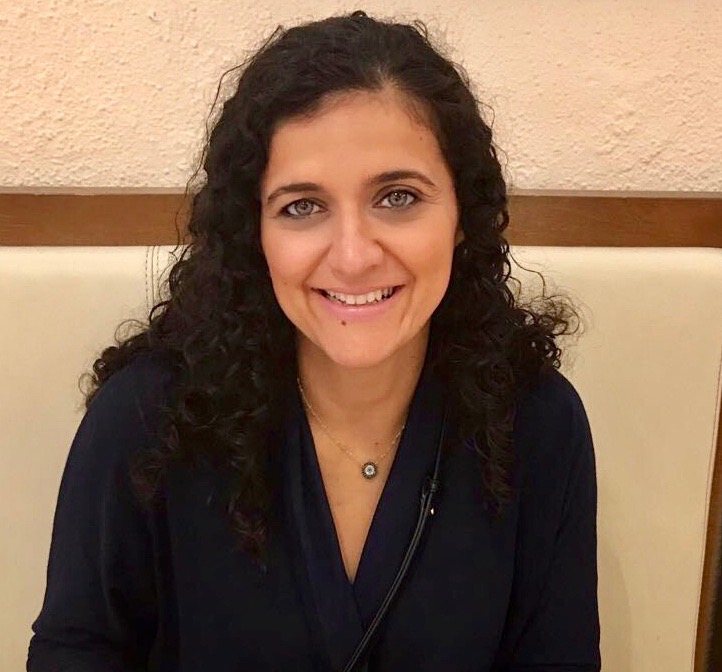
Linda Sayed (she/her) is an assistant professor of comparative culture and politics in James Madison College. She is a core faculty member of the Muslim Studies Program. Sayed earned her doctorate degree in Middle Eastern, South Asian and African Studies from Columbia University. As an interdisciplinary scholar, her research and teaching focuses on the politics of citizenship as it relates to questions of marginalized communities, refugee rights, health care accessibility and systems of national and international governance that inform global public health concerns in the Middle East and among Arab communities in the United States.
When I am asked where I am from, I naturally respond, “New York. Queens to be exact.” That’s where I consider home; although, I was born in Michigan and moved back and forth between New York and Michigan for the early part of my childhood. When I am asked where I am from, the expected response isn’t either of these places. I’ve lived much of my life viewed as someone who doesn’t belong.
Growing up as an Arab, Muslim, American girl to immigrant parents from Lebanon, was not always easy. I entered the public school system in a predominantly white suburb of Detroit. I spoke Arabic at home, so English was not my primary language.
Teachers didn’t know how to deal with me. I was put in ESL classes, held back a grade because teachers assumed I wasn’t ready for formal schooling and, largely, ignored. I finished first grade thinking there was something wrong with me because I struggled to learn how to read.
When we returned to New York, where the schools were more diverse, I found myself among teachers and students who knew how to accommodate immigrants and children of immigrants. Having teachers who believed in me gave me the confidence that I wouldn’t have otherwise had.
However, there still were so many hurdles.
This was due in large part to the perception of Arab and Muslim Americans in the United States; one that deemed them as terrorists, violent, uncivilized, foreigner and “other” and, consequently, not American. Quite frankly, I don’t recall any positive portrayals of Arabs or Muslims on TV or in the news.