When Ethan Pyscher entered James Madison College, he expected law school to come next. He had chosen JMC in part because he saw it as strong preparation for a legal career. Teaching was not part of the plan.
“Not even a little bit,” he said.
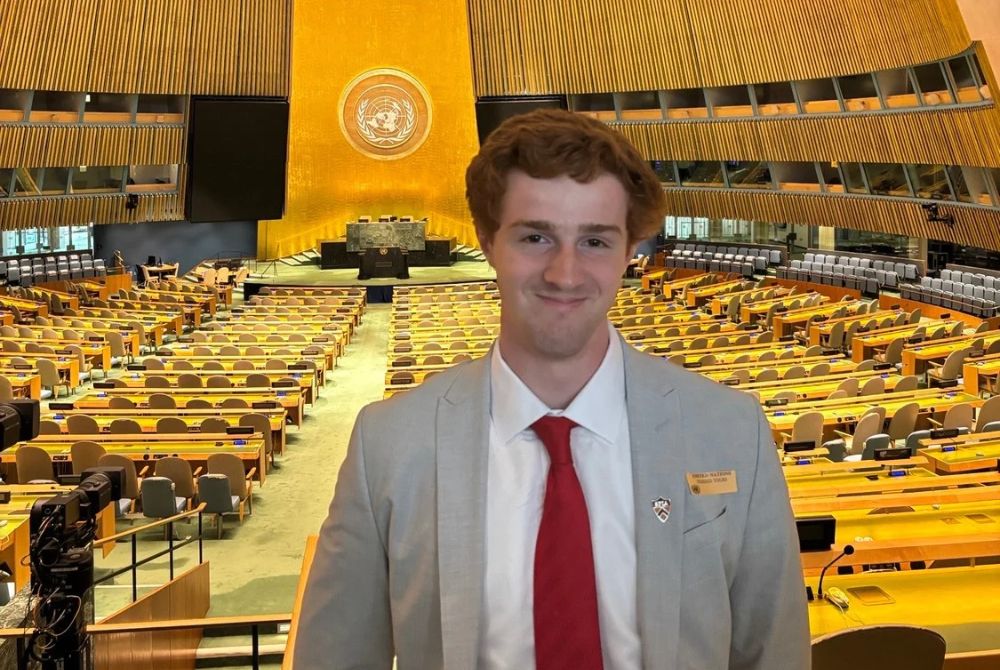
Now a senior in JMC’s Public Affairs for Secondary Education (PASE) major, Pyscher is student teaching U.S. history and preparing for an eventual career in education policy.
JMC launched PASE in January 2026, formalizing a longstanding pathway to teacher certification within the college. The major combines JMC’s interdisciplinary public affairs curriculum with coursework in history, geography and teacher education, along with classroom placements and student teaching. Students can complete both their bachelor’s degree and the requirements for secondary social studies teacher certification in Michigan in four years.
“As a public affairs college, we recognize that teaching is a way for our graduates to use their skills and knowledge in public service,” said Emelia Hammond, JMC’s assistant director of student initiatives, who led the development of the PASE major. Hammond also serves as the academic advisor for JMC students interested in teacher preparation.
PASE is designed to leave room for exploration, Hammond explained. Because its first two years align directly with JMC’s four other majors, students have “on-ramps and off-ramps” as their goals and interests evolve.
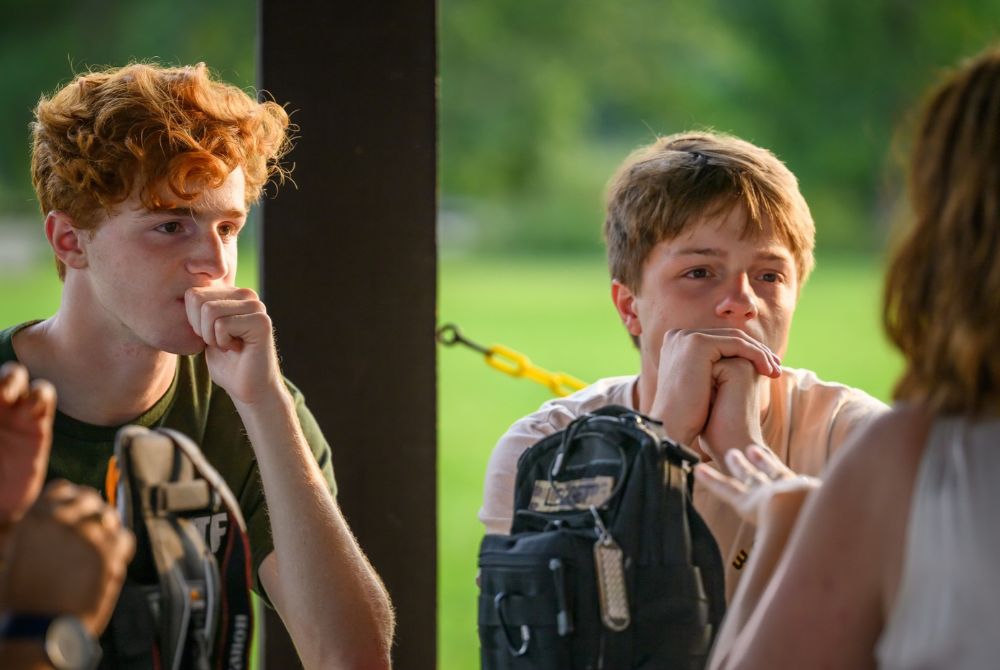
Pyscher’s experience illustrates that flexibility. Near the end of his first year, Hammond told him about the new secondary education pathway JMC was developing. He enrolled in an education course to see whether teaching might be a fit.
That first teacher education course, taught by College of Education Prof. Scott Farver, focused on how educators influence students inside and beyond the classroom and what Pyscher described as “the societal impact behind being an educator.”
“He was really monumental in my education journey,” Pyscher said.
After that course, Pyscher sought out more experience working with children before committing to the major and began working in an Okemos Public Schools before- and after-school care program with elementary students. The relationships he developed there became what he called the “biggest catalyst” for continuing toward a career in education.
That decision has now placed him in a U.S. history classroom. This year, Pyscher is student teaching with mentor teacher Chad DeKatch, a JMC alumnus, at school. He has found connections between the material he teaches — from Indigenous history to industrialization and the Gilded Age — and subjects he encountered in his own college courses.
“I couldn’t see anything stopping me from teaching at this point,” Pyscher said.
His interest in education also extends beyond the traditional school day. Pyscher is particularly interested in extracurricular programs and the opportunities they give students to develop skills and interests that may not emerge in a typical classroom.
For four years, he has been a part of Michigan State University Model United Nations (MSUMUN). This year, he serves as secretary-general of Red Cedar Model United Nations (RCMUN), the organization’s conference for middle school students. Pyscher sees Model UN as a way for students to practice diplomacy, public speaking, collaboration and problem-solving at an early age.
Scheduled for Feb. 20, 2027, at the Broad College of Business, RCMUN XVI is expected to bring about 300 middle school students to campus, including participants from Illinois and Indiana. Delegates consider historical, contemporary and fictional issues, negotiate with one another and work toward collective responses.
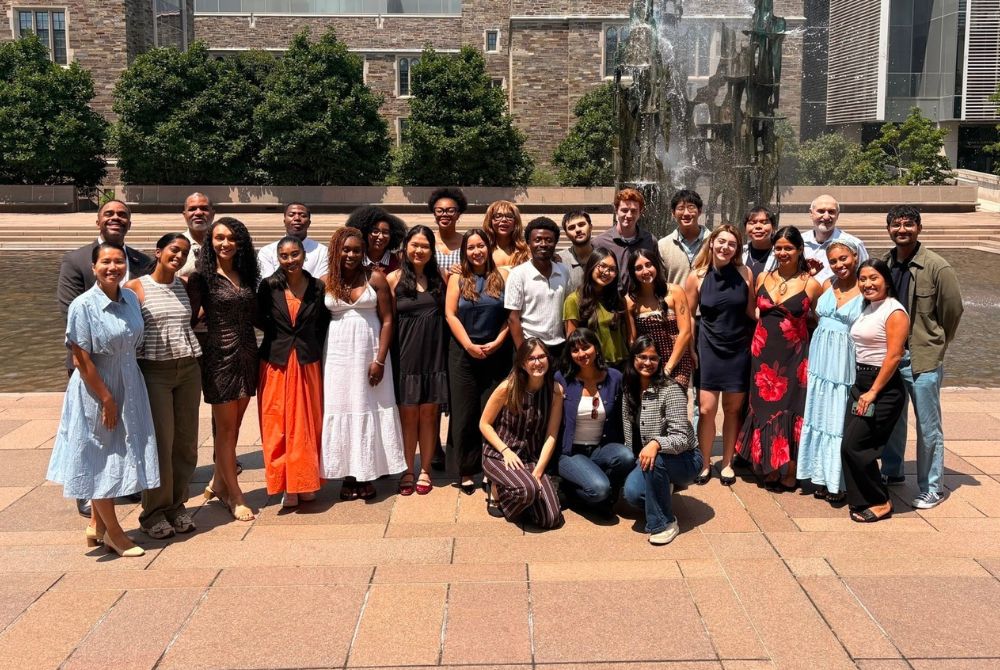
Pyscher spent last summer developing another side of his future work: policy analysis. He attended the Public Policy and International Affairs Junior Summer Institute at Princeton University, an intensive seven-week program designed to prepare students for graduate study and careers in public service.
The institute’s coursework included statistics, economics, domestic policy and quantitative analysis. For one project, Pyscher used mapping software to compare Michigan charter schools with traditional district-run public schools and examine performance patterns.
Working alongside students with different policy interests also encouraged him to consider how education intersects with other issues. Conversations with a fellow studying affordable housing, for example, pushed him to think about how housing and food access can shape students’ ability to participate fully in school.
After graduation, Pyscher plans to spend several years teaching before pursuing a master’s degree in education policy. He is interested in work involving advocacy, legislation or policy research, but wants that work to be grounded in firsthand experience with teachers and students.
For Pyscher, PASE brings those interests together by pairing teacher preparation with a foundation in history, government and public affairs.
Looking back at his path in JMC, Pyscher encourages younger students to give themselves the same freedom to explore.
“You don’t have to commit to things,” he said. “If something sticks, it sticks. If it doesn’t, you’ll learn.”