James Madison College faculty members are working with international collaborators to explore how educators around the world conceive of and practice hope, and how pedagogies of hope can foster connection, collaboration and meaningful action.
Pedagogies of Hope in Higher Education will bring educators together online for asynchronous sessions in October and a live symposium from Nov. 8-19, where both presenters and participants will share how they understand and practice hope in their teaching. Workshops and collaborative scholarship on teaching and learning will continue the conversation following the symposium.
To date, more than 500 people from higher education institutions in 70 countries and territories in Africa, Asia, Europe, the Pacific, the Americas and the Caribbean have already registered (registration remains open leading up to the event).
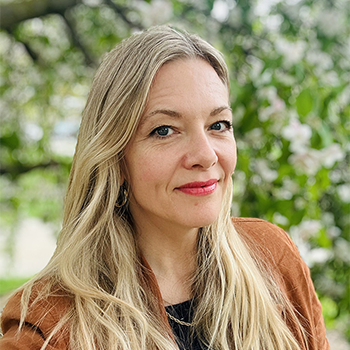
JMC professors Daniel Ahlquist and Amanda Flaim joined the Hope Collective at the invitation of colleagues at Massey University in Aotearoa New Zealand, who established the initiative. Together they have designed the symposium and are working to expand the project into a living international network of scholars and educators.
Pedagogies of Hope responds to mounting international challenges, including climate change, global conflicts, growing socio-economic inequality and the erosion of democratic institutions. Within higher education, these challenges collide with increasing political scrutiny, budget cuts, threats to academic freedom, artificial intelligence, rising costs of attendance, and a rapidly shifting employment landscape.

“In the face of these challenges, hope can be a hard thing to hold onto,” said Ahlquist. “This project arose in part out of a desire to be intentional and proactive about how we navigate these challenges and practice hope in our own careers as educators, and a recognition that we aren’t alone in feeling this way. We see in this moment of uncertainty an opportunity to engage with educators around the world to share experiences and perspectives, to learn from each other and to start building community around what hope might look like in higher education.”
The project draws inspiration from Brazilian educator and philosopher Paulo Freire, who saw hope, coupled with critical reflection and action, as essential to fighting oppression and changing society for the better, Ahlquist explained. Hope Collective organizers use the plural “pedagogies of hope” to recognize the many ways educators think about and practice hope in their work.
For the JMC faculty members involved, the project builds on teaching that asks students to analyze power, inequality and injustice, and to envision how they might move from critique to action.
The November symposium is open to educators working throughout higher education, including faculty, academic staff and graduate students, and will combine asynchronous participation with live online sessions.
For the asynchronous portion, participants are invited to submit an image — a photograph, drawing or collage they have created or one selected from another source — that represents an aspect of hope in their teaching practice, accompanied by a short reflection. Grouped with educators who share similar interests, participants will then engage with and respond to each other’s contributions.
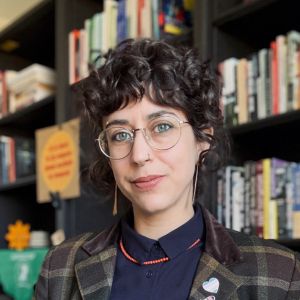
The live online sessions will feature keynote conversations with scholars from around the world, accompanied by interactive discussion. Two MSU faculty will be featured as keynotes. JMC Prof. Florencia Rojo will be the keynote conversationalist for a live session on “Universities as sites of refuge, struggle & action.” Her presentation, “Pedagogy of the Distressed: Teaching Immigration Policy in Anti-Immigrant Times,” draws on her community-engaged teaching and research on immigration.
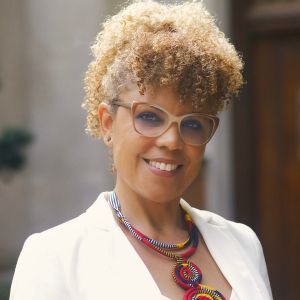
MSU English Prof. Leonora Souza Paula’s presentation “Pedagogies of Hope: Imagination, Bem Viver, and Collective Futures” will serve as the keynote for a live session on “Indigenous and Afro-Indigenous perspectives for a decolonized & pluriversal future.”
Flaim and Ahlquist will serve as event facilitators throughout the symposium.
Organizers hope the symposium will be a starting point for continued engagement, with plans underway to create workshops, collaborative scholarship, online resources and additional opportunities for educators to exchange ideas and support one another.
“We need networks of support across and beyond our own institutions to help us devise ways to implement and celebrate critical, transformative and community-building pedagogies,” said Flaim. “My choice to be a part of the symposium and the collective is entirely guided by my desire to learn from inspirational colleagues around the world.”
Ahlquist and Flaim’s Hope Collective collaborators in Aotearoa New Zealand are Dr. Alice Beban, Dr. Elaine Khoo, Dr. Clare Mouat and Dr. Lisa Vonk of Massey University.
Learn more about the Pedagogies of Hope in Higher Education symposium online. Educators, professional staff, graduate students and others interested in thinking about hope and higher education are invited to participate. Register your interest via Google Forms. Photo submissions and accompanying text, audio or video are due on Oct. 26.