During her internships in the Michigan Legislature, Lila Abdullah noticed that “every other phone call,” it seemed, was about housing.
People described being evicted without proper notice, facing unexplained rent increases or losing their home in an apartment fire without being reimbursed for that month’s rent.
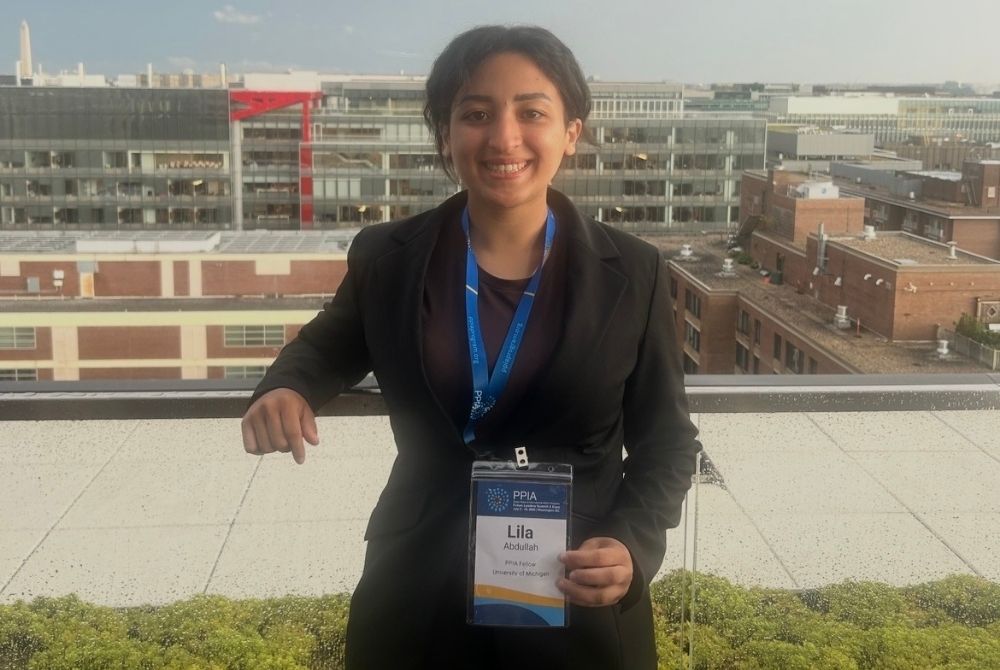
The circumstances varied, but each call showed Abdullah that housing policy was something that shaped whether people could remain in their homes and where they could turn when something went wrong.
“Housing became this big puzzle of an issue for me to solve,” she said. “It’s something that’s actually affecting real people.”
For Abdullah, a James Madison College senior majoring in Social Relations & Policy and Criminal Justice, those calls brought several of her interests into focus: the housing problems affecting Michigan residents, the layers of government responsible for addressing them, and the laws and funding decisions that shape people’s options. She has explored those connections through legislative internships, service on the East Lansing Housing Commission, the Spartan Housing Alliance she founded at MSU and, most recently, policy-analysis training through the PPIA Junior Summer Institute.
That focus developed through years of seeking out opportunities to see government in action.
In high school, Abdullah took criminal justice courses through Mott Community College and developed an interest in law, reading and writing. Michigan State University appealed to her in part because of its proximity to the state Capitol. She already knew that she wanted to intern there when she enrolled at JMC.
Within the residential college environment, she found the small classes and discussion-based curriculum she had been looking for. Abdullah was drawn to a community where students were as interested in politics and public affairs as she was.
“It was nice to be able to join a cohort that is as nerdy as me,” she said.

The college’s Social Relations & Policy major offered the combination of sociology and public policy, while criminal justice provided a stronger understanding of law and legal institutions.
Courses in social theory and U.S. health policy helped her examine public policies and how institutions and layers of government shape their effects. Outside the classroom, Abdullah began looking for opportunities to work where those decisions were being made.
Her first legislative internship came during her first year at JMC, when she worked in a Michigan Senate office. At the time, she did not know what constituent services involved, but quickly learned how legislative offices help residents navigate state agencies and respond to problems affecting their lives.
The experience confirmed that she wanted to continue working in government.
“It puts me in the same environment that I want to be in 10 years,” she said. “It’s like, this is my future, right in front of me.”
Abdullah went on to work in the Michigan House of Representatives, political campaigns, the governor’s office and the congressional office of U.S. Rep. Rashida Tlaib. Each role gave her a different view of how public institutions operate, from state agencies and legislative offices to federal constituent services.
Getting there required persistence. Abdullah applied to the governor’s office three times without receiving an interview. Rather than changing course, she treated each rejection as a reason to gain more experience.
“Every time that I got that rejection, I was like, ‘Okay, I just need to keep building,’” she said.
Her fourth application led to an internship with the governor’s office of federal affairs and appropriations. There, she learned more about intergovernmental relationships and the flow of funding among federal, state and local governments.
“That’s where my interest kind of crystallized,” Abdullah said. “I realized I care about housing. I care about intergovernmental affairs and funding. I care about the state of Michigan in general.”
She also began looking for ways to work on housing more directly. At 19, Abdullah applied for and was appointed to the East Lansing Housing Commission, an advisory body to city council.
She later founded Spartan Housing Alliance, a student organization intended to help MSU students understand how housing policy affects their daily lives. After examining university housing policies, Abdullah identified what she viewed as an inequitable $50 fee that’s part of MSU’s housing application and met with university leaders. Her work contributed to an ASMSU resolution encouraging the university to eliminate the fee.
The organization has since formed partnerships with campus and statewide groups and is shifting toward a greater emphasis on advocacy. One of Abdullah’s goals is to make complicated housing proposals more understandable to students.
Changes to lot sizes, zoning rules or building requirements may sound technical, she explained, but they can influence how much housing is available, what it costs and whether today’s students will be able to purchase homes in the future.
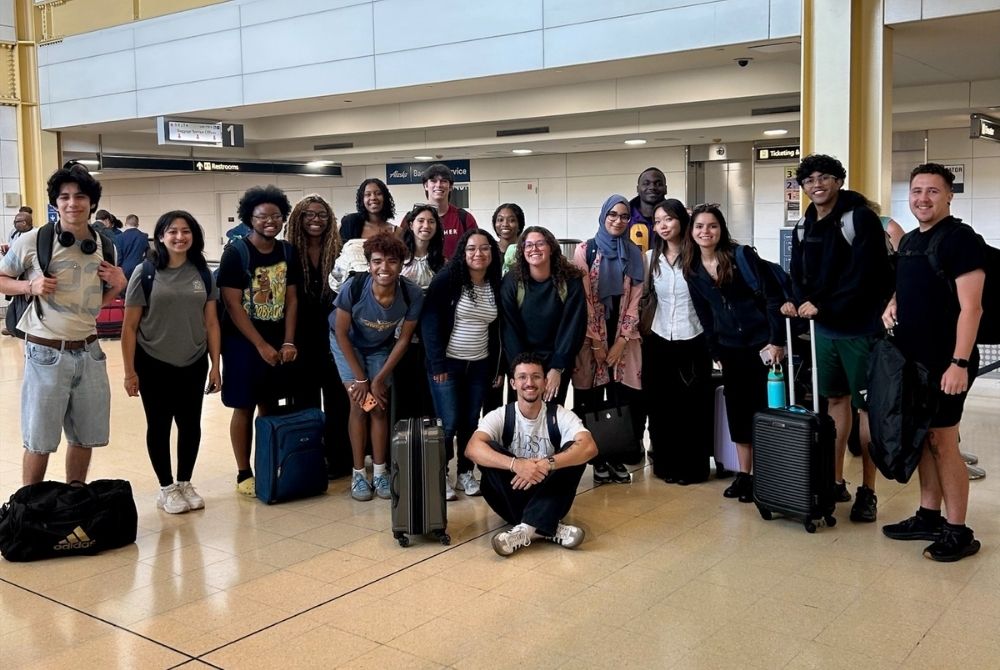
This summer, Abdullah added another set of tools through the Public Policy and International Affairs Junior Summer Institute. She was one of 53 students (and three Madisonians) selected from approximately 730 applicants for the seven-week program, which was offered at the University of Michigan, Princeton University and Harvard Kennedy School.
At Michigan, Abdullah studied statistics and microeconomics, participated in policy workshops and learned to use the statistical programming language R. The coursework changed how she could approach the housing questions that interested her.
Rather than relying on a statistic reported in an article, she could begin working with raw survey data and conducting her own analysis.
“The program gives you really good quantitative skills,” she said. “It gives you that agency to look into the problems you’re interested in.”
The fellowship also introduced Abdullah to students from across the country who shared her interest in public service. Despite their different backgrounds and policy interests, she saw a common belief that government could be used to address difficult problems.
“I fit in with these people,” she said. “It kind of gives you hope, too, in the future.”
As she begins her final year at JMC, Abdullah hopes to strengthen Spartan Housing Alliance before graduating and is considering pursuing a master’s degree in public policy. In the longer term, she can envision herself leading a Michigan state department or serving in another high-level state government role.
Her ambitions remain centered on the state that became home after years of moving.
“Michigan is going to be my case study for the rest of my life,” Abdullah said. “I just want to make it a better place to live.”