James Madison College has appointed International Relations Prof. Norm Graham as associate dean, returning him to a role he previously held from 1999 to 2012.
Graham, who joined the college as a full-time faculty member in 1987, will help oversee college policies and strategic initiatives, support faculty research and development, contribute to curriculum and international programming and represent the college in university-wide matters.
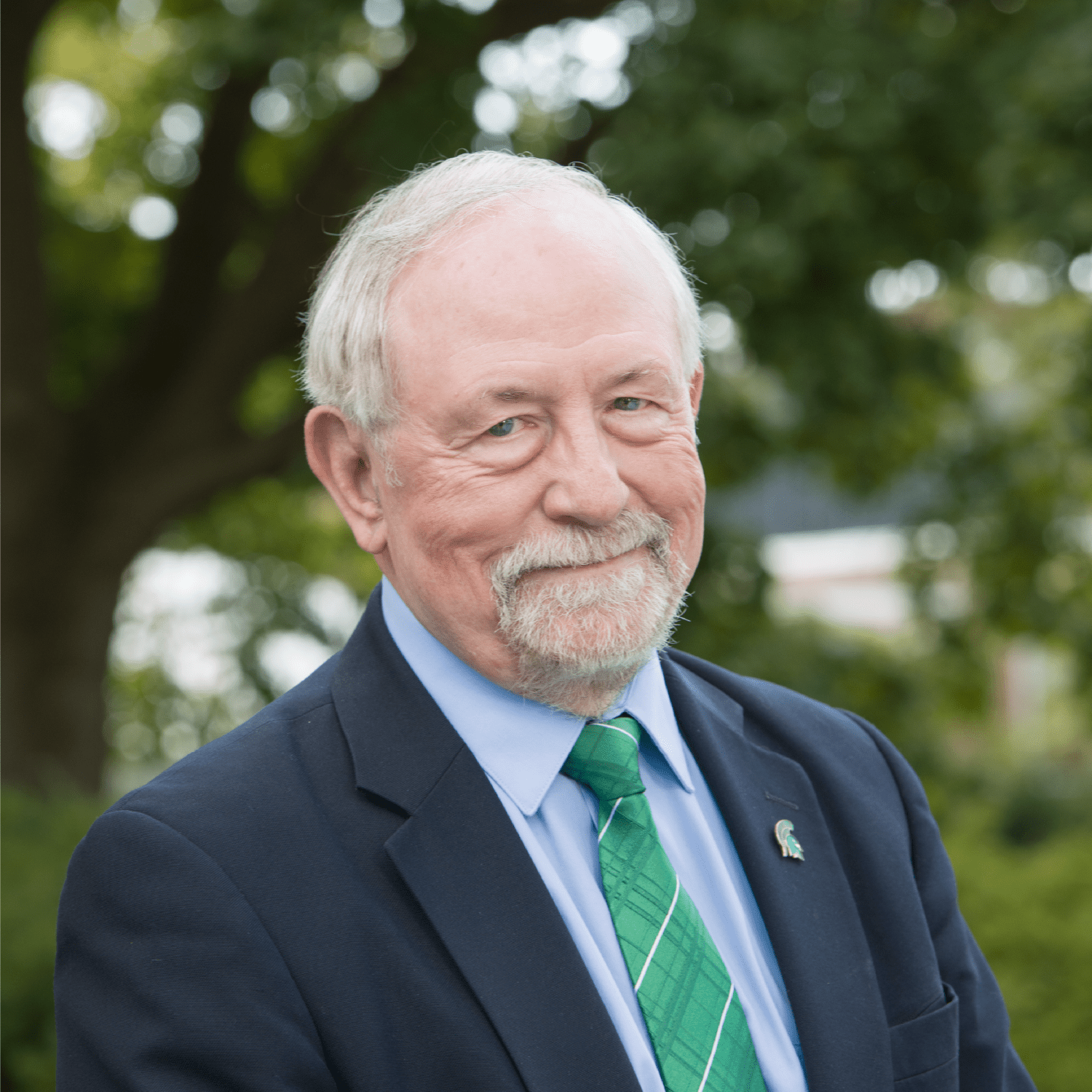
He succeeds JMC Prof. Linda Racioppi, who will return to her faculty role in the college’s International Relations and Politics, Rights & Culture fields.
The appointment draws on Graham’s extensive experience across the college and university. In addition to his previous service as associate dean, he has twice served as acting dean and directed MSU’s Center for European, Russian and Eurasian Studies for 30 years. His published research includes 11 books and numerous articles and government reports. He has received numerous honors for his teaching, scholarship and contributions to international studies, including MSU’s Teacher-Scholar Award and the 2023 Ralph H. Smuckler Award for Advancing International Studies and Programs.
“Norm Graham brings an extraordinary depth of institutional knowledge to this role, along with the perspective of a highly respected scholar of international relations,” said JMC Dean Cameron G. Thies. “He is a trusted and deeply valued member of the JMC community, known for his thoughtful leadership, sound judgment and commitment to our students. We are fortunate to have him serving as associate dean at such an important moment for the college.”
Graham’s career has repeatedly crossed between the university and the wider policy world. Graham has served as a research associate with the United Nations, the World Health Organization and The Futures Group, a research and consulting firm that sponsored projects for a series of US government and international agencies. He has taught at Columbia University and led the Yale University Summer Seminar on International Business.
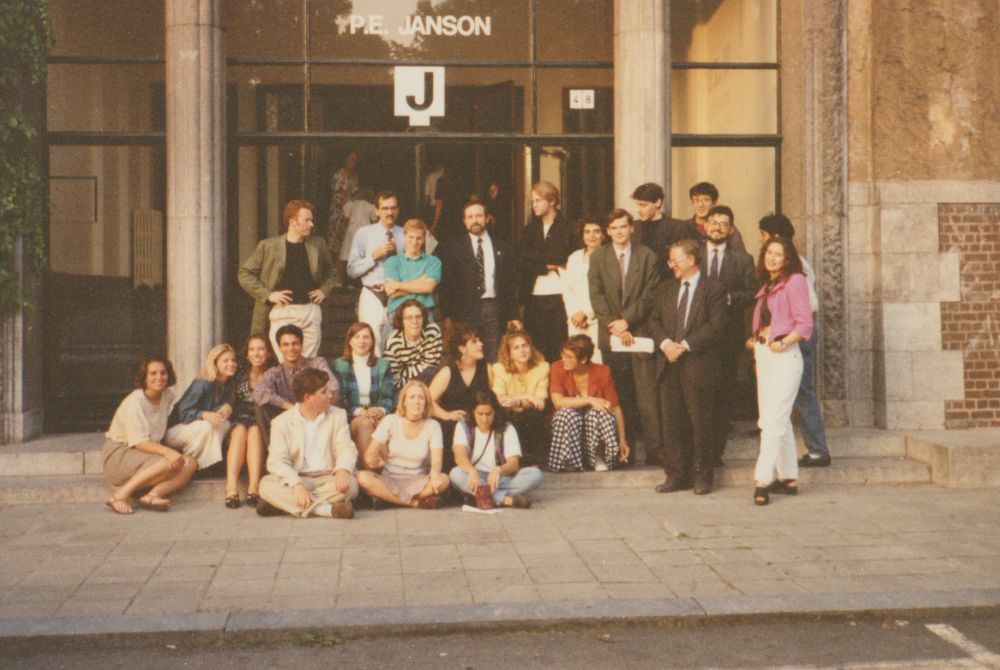
As associate dean, he will oversee the college’s international experiences and support faculty research and grant activity, areas where that background applies directly. He is well-prepared for supporting the College’s education abroad programming, given his founding role of the International Relations in Brussels summer program with Professor Emeritus Michael G. Schechter in 1989. Approaching 40 years of annual summer study at the Free University of Brussels, NATO and the European Union each July, this program is a valuable exemplar of the opportunities the college offers for impactful experiential learning. Graham looks forward to working with faculty to develop new education abroad options to meet evolving student and faculty interest.
Although the role is familiar, Graham returns to it at a markedly different moment for JMC and for higher education, as colleges and universities navigate financial constraints, enrollment pressures and increased competition for students. His earlier administrative experience taught him that even seemingly straightforward changes require time, consultation and a shared sense of purpose.
“It’s not that it doesn’t ultimately happen,” Graham said. “It’s just that it often seems to take so long because you need to build consensus and get people on board to make necessary changes. That’s the way it probably ought to operate.”
That approach will inform several projects already underway at JMC. Graham served on the committee that helped develop a proposed new major in Environment, Development and Governance and plans to remain involved as the proposal moves through the university’s curricular review process. The proposed major would bring together questions of environment, development and governance through JMC’s interdisciplinary public affairs lens. Graham said it could help students better understand complex global challenges such as climate change and consider careers related to them that have not seemed up to now a primary focus of the college.
He is also participating in the university’s undergraduate program review of the college’s International Relations curriculum. Those conversations require faculty to consider not only what and how they want to teach, Graham said, but how courses fit together and what students need from the major.
For Graham, those curricular questions are closely connected to how JMC presents itself to prospective students. He believes the college can build on its growing recruitment efforts by showing more clearly how its majors, courses and experiential-learning opportunities prepare students for careers across public affairs.
Graham will continue teaching half-time while serving as associate dean and pursuing two collaborative research projects. One project examines dams, transboundary water-sharing and environmental challenges in Central Eurasia, and it involves collaboration with several JMC current and former students to help develop case studies. The other project considers the apparent return of “naked imperialism,” with a primary focus on Russia’s invasion of Ukraine, and the relevance of international law and norms. Prof. Matt Zierler is the co-author of this project. Graham expects his administrative responsibilities will slow both projects, but the courses he will continue teaching — Russian foreign policy and the politics of international economic relations — will keep him engaged with many of the same questions in the classroom.
For all the administrative experience, Graham is quick to say teaching interesting and conscientious students is what brought him to East Lansing and what has kept him here. He chose academic life over government and consulting careers because he wanted to teach, and nearly four decades later that has not changed.
“It’s the best job in the world,” he said. “I love the college and I love the students we have.”
Graham recalls an honors student joining his first senior seminar on Japanese foreign economic policy who had spent a summer interning at a prominent Washington law firm. He had seen this as a key step in his long term plans to become an attorney. However, he returned from that experience certain, to his surprise, that law practice was not for him. Fortunately, he recognized that one should not go automatically to law school or any other long expected post-graduate path without exploring a range of possible options. The student used his seminar to explore international business and economic relations instead and went on to an executive program at General Motors that funded his studies for an MBA. This in turn led to a career that suited his emerging interests more thoroughly. Graham believes the college is well suited to help students find their initial post-graduate path with intention and due care.
For Graham, the story illustrates the kind of advising the college makes possible, where faculty know their students well enough to help them evolve in their career choices and possible graduate study plans.