More than 3,700 large hydropower dams are currently planned or under construction across the global south. A new review article published in Nature examines whether the governance systems surrounding those projects have kept pace with the scale of development and changing context.
The paper, “Challenges and opportunities for the governance of hydropower,” brings together 10 researchers from five countries, including three from Michigan State University. Among them is James Madison College Prof. Daniel Kramer, who holds a joint appointment in the Department of Fisheries and Wildlife. MSU co-authors Maria Claudia Lopez, associate professor in the Department of Community Sustainability, and Emilio F. Moran, Hannah Distinguished Professor Emeritus in the Department of Geography, Environment & Spatial Sciences, also contributed to the review.
The collaboration developed through the National Socio-Environmental Synthesis Center (SESYNC), an organization that fosters interdisciplinary research on environmental and social problems. The 10 co-authors were looking for common ground, each bringing expertise in different elements of global hydropower development.
“We all got together and asked, is there something that we can say to reflect our own work, our own ideas or concerns and what’s happening in the world with hydropower?” Kramer explained.
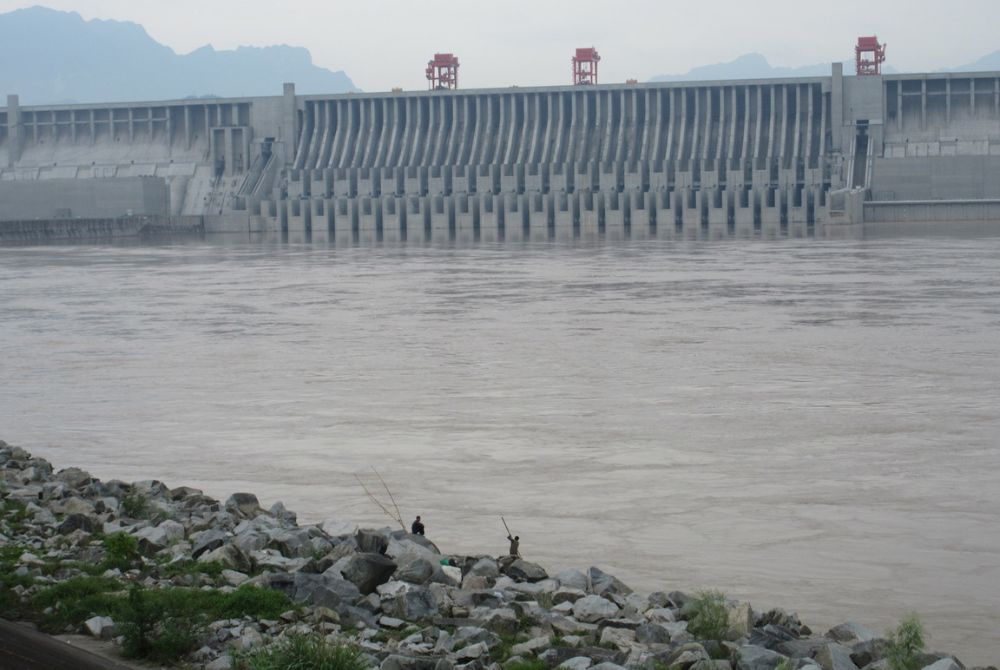
The review begins with the World Commission on Dams, a 2000 initiative that introduced guidelines for water and energy project planning. It called for better protections for dam-affected communities through improved consultation, fair compensation and equitable sharing of benefits. More than two decades later, the authors find that dam construction across the global south continues to cause ecological disruption and harm to local livelihoods, often without the commission’s recommended safeguards.
“We’re still doing the same things and we’re still causing the same problems in terms of environmental problems or creating problems for downstream communities because of upstream dams,” said Kramer.
While some of the problems persist, the landscape around them has also changed significantly since 2000. The justifications for building dams and the groups financing them have shifted, creating both new challenges and opportunities.
Rationales for building dams are one example. Economic development has been a longstanding justification, but climate change has added another. Hydropower is now promoted as a low-carbon energy source, and dams can help manage water supplies as rainfall patterns shift. But Kramer said those arguments raise questions.
“It becomes more challenging for an environmentalist to come at dam building on purely environmental grounds when the rationale from country governments and those building dams is, we need to do this because of climate change,” he said.
The financing behind large dams looks different as well. The World Bank was once the primary funder of hydropower in the global south. Today, many projects are financed through private corporations, state-private partnerships or Chinese development banks and construction firms.
“Private corporations just have different incentives,” Kramer said. “Less kind of public good oriented and more private profit oriented. And so they maybe have fewer concerns about social outcomes, environmental outcomes.”
Since 2000, environmental justice movements have developed into a significant global force. The review found that protests have succeeded in halting, postponing or modifying 37% of contested dam projects. The International Hydropower Association has developed voluntary sustainability standards, largely in response to pushback, though the review notes that the protocol has only been applied to about 40 projects.
Advances in science and technology have created new tools for planning. Researchers can now use sophisticated modeling to evaluate how a series of dams might perform together, rather than assessing each project in isolation.
“If you are thinking about constructing a dam, but you already have a half-dozen existing dams, you can use some pretty sophisticated hydrological modeling to figure out how adding to the current portfolio of dams might affect how other dams operate,” Kramer said.
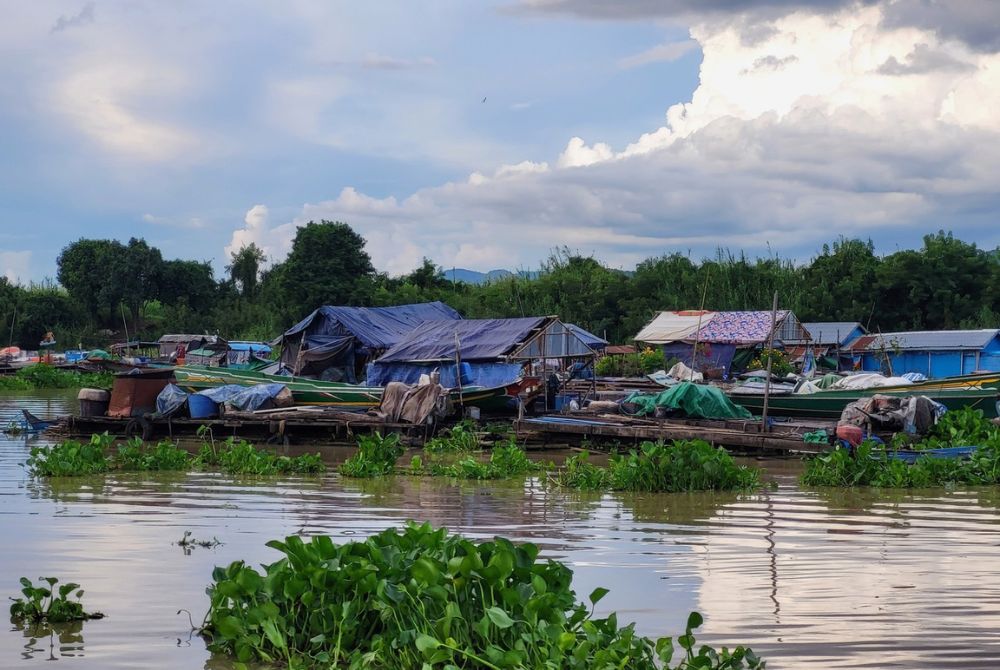
The paper draws in part on Kramer’s own research in Southeast Asia, where he has studied how fishing communities and farmers experience the effects of dam construction. That work, conducted in Cambodia and Thailand with support from NASA and the Henry Luce Foundation’s $1 million Mekong Culture WELL project led by JMC Prof. Amanda Flaim, operates at a different scale than the review but informed his perspective on what governance gets wrong.
“When we would travel around Cambodia or Thailand and talk to villagers about the dams that are affecting them, sometimes they’ve never even seen these dams,” Kramer explained. “The problems flow downhill. You just hear these stories, and they validate the things that you read about.”
Kramer said the SESYNC project left him more optimistic than not. He noted that while he typically works at the local level, this project was a unique opportunity to explore the scale of international governance. Now that the paper is published, he said, the work shifts into a different phase.
“You put out these ideas and do some assessment to see how it lands,” Kramer said. “To see if any of these ideas, or maybe the optimism that’s included in this paper, is picked up by the people and policy makers that think about these things.”
The full review, “Challenges and opportunities for the governance of hydropower," is available in Nature Sustainability.