What drives armies to fight? A Madison professor’s examination into that question reveals how national identity becomes a weapon or a weakness.
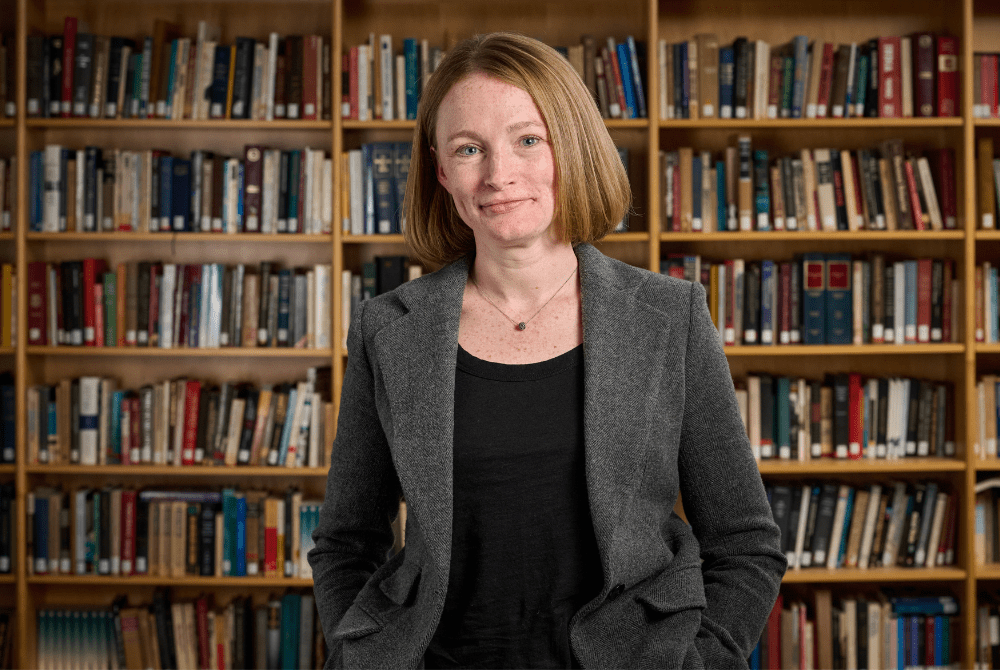
JMC Associate Professor Kirstin J.H. Brathwaite’s new book, Symbols and Sacrifice in War, challenges conventional wisdom about military motivation. She argues that soldiers’ commitment to battle depends not just on training or unit bonds, but on whether the war’s goals align with their deepest beliefs about national identity.
“Nationalism doesn’t always lead to motivation in battle,” Brathwaite explained. “Sometimes it can actually push back against and undermine motivation if soldiers feel that they’re being asked to do things that conflict with their national identity.”
A research journey across continents
The project began when Brathwaite encountered a passing reference to Polish soldiers who had escaped their Nazi-occupied homeland during World War II and reconstituted themselves as a unit under the British army in North Africa. That brief mention sparked a realization: the British had organized their entire imperial army by national groups, creating an opportunity to study how different identities performed in similar battle conditions.
Though the focus shifted from the Polish forces, that initial curiosity launched more than a decade of research spanning archives in London, Australia and beyond. Brathwaite examined British, Australian and Indian forces fighting in North Africa, Malaya and Europe during World War II, exploring vastly different national perspectives to the same conflicts.
At the British Library, the British National Archives and the Australian War Memorial, Brathwaite studied unit diaries, battle reports and censorship reports created by military officials who read soldiers’ mail home. These sources revealed fascinating details beyond military strategy, including when Australian morale reports tracked soldiers’ improved spirits when American beer replaced British beer.
“They would censor the letter and then write up morale reports based on the mail that they were reading,” she explained. “It let me sort of get a bird’s eye view of the things that the soldiers were saying.”
National identity in battle
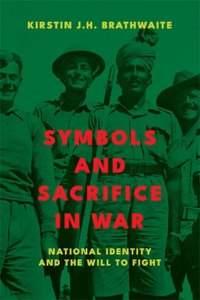
Brathwaite’s central argument challenges the prevailing theory that soldiers fight primarily for their immediate comrades. Instead, she demonstrates that national identity shapes military motivation in complex ways, sometimes enhancing performance and sometimes undermining it.
British soldiers, for example, fought with fierce determination against Nazi forces in North Africa and Europe, battles that clearly aligned with protecting Britain itself. But those same soldiers showed markedly less motivation when fighting Japanese forces in Malaya, viewing that conflict as peripheral to British identity and interests.
“They didn’t see this as being central to protecting Britain,” Brathwaite explained. “They saw Malaya as being sort of outside of their identity. ‘They don’t want us here anyway. And I would rather be fighting the Germans than the Japanese.’”
Australian forces, by contrast, maintained high motivation across both theaters because they viewed themselves as integral defenders of the British Empire, which made both European and Pacific conflicts central to their national identity.
The Indian army presented the most complex case, with soldiers holding multiple, sometimes conflicting national identities that evolved throughout the war. Some remained committed to defending India through defending the empire, while others saw little difference between Japanese, German and British imperialism. Political divisions between Hindu and Muslim communities deepened over the course of the war, and resentment over British policies grew—particularly after famine struck India. Yet censorship reports consistently misread these soldiers’ concerns, claiming morale remained high even when letters home clearly expressed terror about family members facing starvation.
Contemporary applications
Beyond historical insights, Brathwaite’s findings carry implications for contemporary military policy, particularly regarding personnel decisions. She argues that the traditional “unit cohesion” rationale — used historically to justify racial segregation, exclude gay service members, and bar women and transgender service members from combat — fundamentally misunderstands how military motivation works.
“The consensus has been that unit cohesion leads to combat motivation. If you have a cohesive unit then you get combat motivation so you don’t have to worry about politics, but I think that is not the whole story,” she said.
Brathwaite’s research suggests that cohesive units without broader commitment to a war’s goals can just as easily desert together or turn against their officers.
The book also offers insights into current conflicts, from Ukraine’s fierce resistance against Russian invasion to potential scenarios involving Taiwan or Iran, where the alignment between national identity and military objectives could prove decisive.
For Brathwaite, who teaches international security and international relations at JMC, the project exemplifies how historical investigation can illuminate contemporary challenges. Understanding how soldiers’ beliefs about national identity can shape willingness to fight and die offers crucial insights into the nature of military power itself.
Symbols and Sacrifice in War: National Identity and the Will to Fight is available through Georgetown University Press.