Renowned ecologist and philosopher Aldo Leopold once wrote that “One of the penalties of an ecological education is that one lives alone in a world of wounds.” Developing an ecological education is a tricky thing. As Aldo Leopold wrote, it can be deeply painful and alienating. But for those committed to solving the environmental crises of our time, there is no other option.
This past spring semester, I was enrolled in Prof. Daniel Ahlquist’s section of MC 338, Environmental Justice and Global Change. The purpose of the class was to further instill an ecological education in us Madisonians, one that was deeply reflective, wholly authentic and entirely comprehensive. In other words, we sought to understand environmental problems not from a solely biophysical standpoint, but rather from one that encompassed the reality of human action and behavior. The ecological education we received was shaped by an environmental justice perspective, which directly focuses on the inequalities reflected between humans and land. We read and discussed a diverse array of material, everything from case studies on the racially and socioeconomically unjust siting patterns of polluting operations to indigenous oral histories relating to the creation of the universe.
Prior to taking this class, I was already an environmentally minded young person, as so many of us Madisonians are. I was involved in MSU’s branch of the Sunrise Movement, a youth climate activist organization that supports hundreds of collegiate and high school hubs across the country. My minors in Sustainable Agriculture and Food Systems and Science, Technology, Environment, and Public Policy have encouraged me in pursuit of a life where fighting climate change and bettering the environment are at the center of my actions.
However, despite my best intentions, my ecological education was still formative prior to MC 338. I lacked knowledge on the authentic environmental history of the US and how human-nature relationships have formed specific political, cultural, and economic undercurrents in this country. While I greatly enjoyed the entirety of MC 338, I found myself particularly invested in the second half of the class, where Professor Ahlquist focused our attention mainly on indigenous philosophies relating to land, people and animals. In many indigenous cultures in North America, land and people are not categorized into two distinct binaries. They are inextricably bound to one another through language, cultural practices, and longstanding histories. Land and people are one, and therefore, all aspects of the natural world are deeply cared for through reciprocal methods of responsibility. Additionally, we learned how settler colonial forces have built and maintained a falsified image of the American West as a land of untouched, “primitive” beauty, despite the presence of indigenous people on the land and their careful cultivation of the natural world.
At the end of the semester, we were charged with completing a research assignment of our own choosing. I wanted to combine my interests in indigenous land ontologies with my lifelong passion for equines. Growing up on a horse farm in Wisconsin, I always felt a deep connection to the animalist for which I remained responsible. Anyone who has spent time around horses can agree that there is a certain quality to them that is good for the soul.
My final research project was entitled “Reversing Settler Colonial Power: How the Horse Enforces Strategies of Resistance and Survival for Indigenous Peoples.” It describes how settler colonial forces have attempted to erase the role of the horse in indigenous history by directly killing or dispossessing horses belonging to indigenous nations. This is inherently a form of ecological domination, as it severs the tie of responsibility and reciprocity between people and nature, and further props up the cultural perception of the West as being tamed through use of the horse, despite the true history of horses being incredibly valuable to indigenous tribes in resisting colonization.
Animals are often secondary aspects to an ecological education, but the comprehensive nature of indigenous knowledge systems views them with equal importance to both humans and other facets of the land. Completing this project was incredibly meaningful. Like all else learned throughout the semester in MC 338, my ecological education was being broadened to include topics previously thought unimportant. I was finally uncovering the true, authentic history of the land that our country resides on. Horses were no longer a symbol of an unattainable West to me. They began to represent my responsibility, my indebtedness to the natural world and to providing an authentic history of our country.
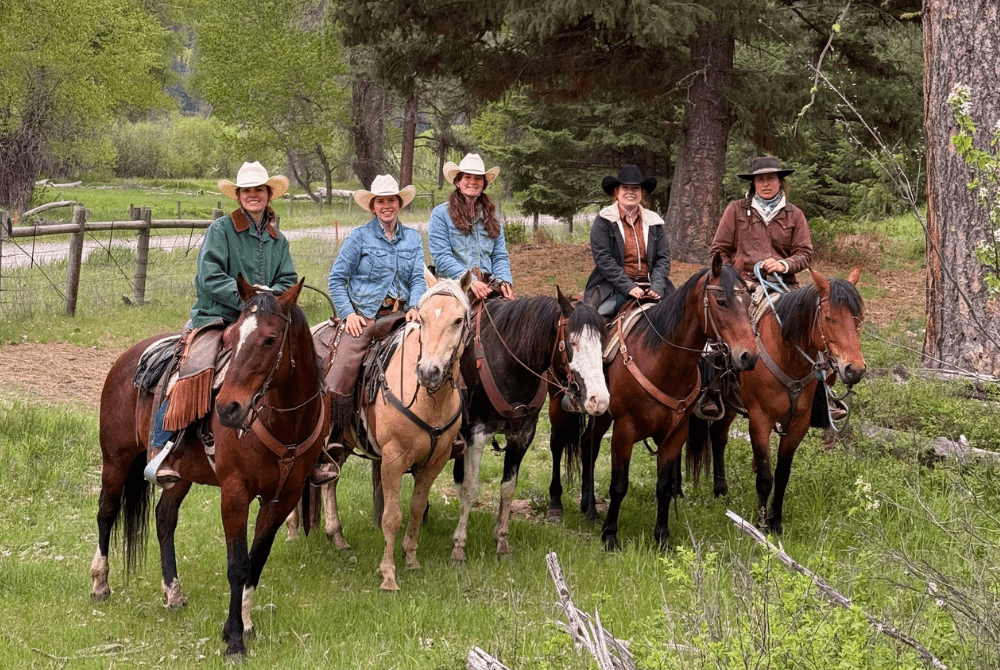
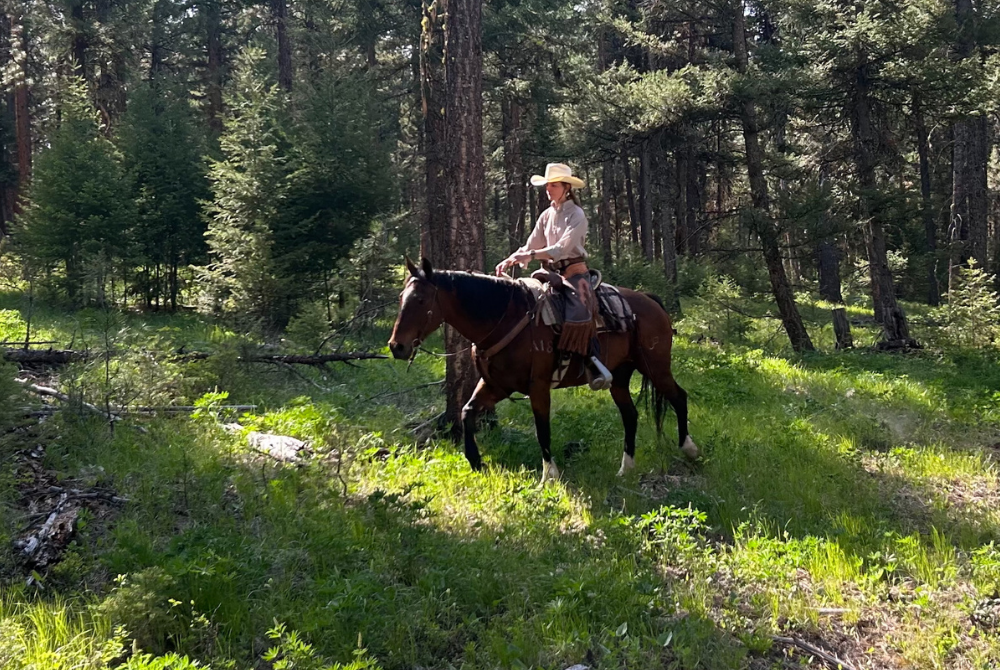
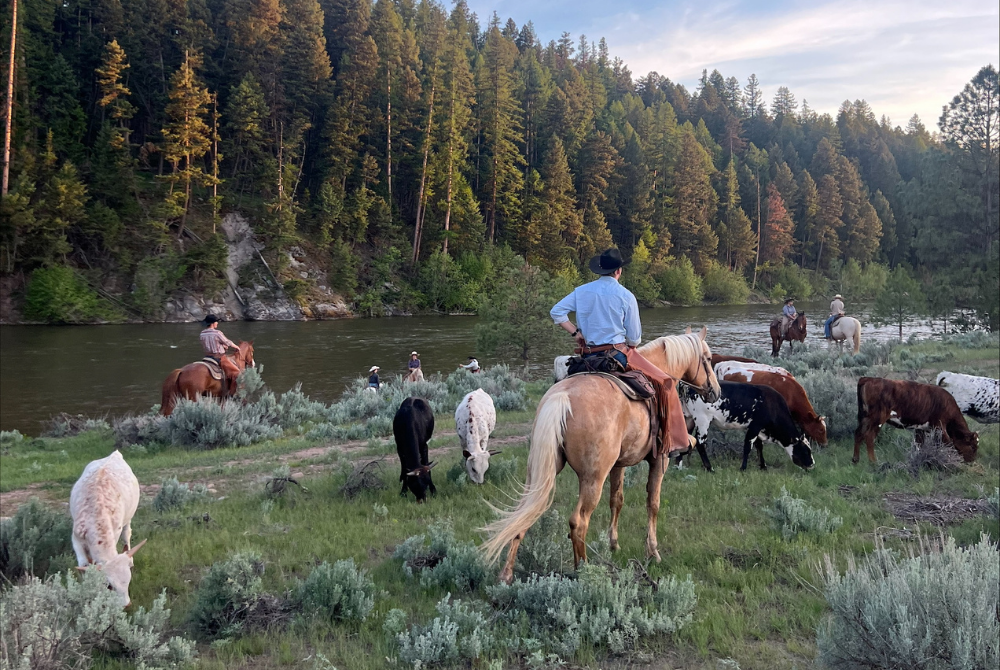
When an opportunity arose to work with horses this summer, I jumped at the chance. In early May, I drove my car from East Lansing all the way to Northwest Montana to work as a horse wrangler at a guest and cattle ranch. Riding and taking care of 120 horses is not an easy task, but every morning as the sun rises over the mountains and into the valleys where the horses spend their nights, my ecological education gleams.
True to what Aldo Leopold wrote, it does not come without pain. I am standing on indigenous land when I watch our herd calmly graze in the soft morning light. The Crow and the Blackfoot once stood where I stand now. I am privileged enough to ride and care for the magnificent creatures that were so unfairly ripped from tribal nations, their last great resource when all else was stolen. When the horses run out to the field at night, I cannot help but think of the indigenous horses that once ran across the prairies and mountains the same way before their untimely culling at the hands of the U.S. government.
If there is one thing that I have learned throughout my time at James Madison, it is that the past cannot be changed, but our perception of it can be. With the ecological education that I have been so lucky to receive, I find it my responsibility to pass on the true history of the land, of the horses, to others. Most of my job involves taking those with little equine experience on rides across the plains and through the mountains. Indeed, most of them have never seen nature the way nature is in Montana. Instead of bolstering the image of a pristine, untouched West, I now tell the authentic history of the land. There were horses here once, long before ours. They are gone now, their bones a memory in the dirt. But if you listen closely, tune out all the other noises of our current world and let your ecological education shine, you can still hear them running.